What is a thermal test?

what is a thermal testWhat is a thermal test? In some cases, a thermal test can refer to a noninvasive medical examination that is conducted with a thermal probe. In the electrical industry, thermal imaging is a non-destructive means of measuring and mapping surface temperatures. This might include structural or equipment based inspection.

The best part about thermal testing is its non-destructive nature. You can find out if there is a problem with your building (or appliances) without taking them apart. Pinpoint a problem with a simple scan instead of dismantling your property.

At Kerfoot, we refer to our thermal imaging services as a thermographic survey.

Heat sensing technology can be used to diagnose an issue in the following range of equipment/structures:

  • Switchboards
  • Floors
  • Walls
  • Doors
  • Electrical wiring Roofing
  • Mechanical equipment
  • Appliances
  • Engines
  • Ventilation systems
  • Transformers
  • Power factor correction units
  • Motor control centres

What is a thermal test used to determine?

When a technician uses thermographic scanning equipment to assess an area, they are measuring the heat emissions emanating from that site. A thermal map is created with this data. After you have a thermal map, a professional tester can identify any dangerous heat signatures.

If an abnormality is identified, it will be assigned a hazard level and dealt with by our team. We’ll help you fix your equipment or recommend a repair or replacement service.

Why is electrical thermography testing important?

It is normal for electrical equipment to heat up when it is being used. Problems start to occur when the temperature gets too high – this can melt electrical wiring and cause sparks and fires. High temperatures can be caused by old equipment or faulty/damaged equipment. Thermographic testing is most effective as a maintenance procedure. With regular inspection, you can identify easily identify an issue with your equipment before the damage is done. Avoid dangerous conditions and disruptions to your working environment today with this essential electrical maintenance service.

Is there an Australian standard for thermal imaging?

Currently, there is no standard for thermographic scanning in Australia. In 2012, a Code of Practice was created to help create uniformity amongst thermal imaging technicians across the nation. The Code is informed by the Electrical Safety Act and the Electrical Safety Installation Regulations Act.

As a business owner or manager, you are required to provide a safe workplace for your staff members. Switchboards must comply with the AS 61439.1:2016 and the As/NZS 3000:2007. Thermographic cameras must also meet the relevant manufacturing standards. For more information about the standards we adhere to at Kerfoot, contact us today. We’d be happy to answer any of you questions about thermal testing.

What is a thermal test technician?

Qualified technicians are recognised by the Australian Institute for Nondestructive Testing (AINDT). Thermographic scanning can be conducted by individuals who have been trained in category 1, 2, or 3 IRT (infrared thermography). This training must be awarded by an AINDT approved training body.

When you choose Kerfoot to conduct your thermal imaging requirements, all tests will be carried out by a qualified individual. We are committed to professionalism and excellent electrical maintenance services. Ask our adept team members to visit your property today.

Why should I choose Kerfoot for electrical maintenance?

We offer competitive service prices to help you keep your thermographic survey cost low. Our electricians can complete a comprehensive range of electrical maintenance services for your business. For an all-inclusive preventative maintenance package, contact our award winning team today.

Our electricians are highly trained and qualified to conduct a myriad of electrical maintenance services. We are an organisation that is committed to customer satisfaction. Our service team is unparalleled and our electrical knowledge is all-encompassing. We’re celebrating 45 years of work in our industry. Let our family run business contribute to the longevity of your company.

Through routine inspection and maintenance, your equipment will last longer. Save time and money with our preventative services. What is a thermal test going to do for your business? It will provide you with peace of mind. Continue your work knowing that your equipment and structural surroundings are safe and functioning as they should.

Want to know more about our safety testing services? Contact us now on 1300 850 869 or fill in the online form to make an enquiry.

Why Electrical Construction Jobs Are the Most Rewarding

electrical construction jobs


Kerfoot is celebrating 45 years in the business!

There’s a reason we’ve been working in this industry for so long – electrical construction jobs are some of the most rewarding projects you can work on. At Kerfoot, we love seeing our plans become a reality. By working closely with our clients and functioning as a team, we achieve excellence in all our projects – year in, year out.

If you’re thinking about a career in the electrical construction industry, take a look at our new careers section. We’re on the lookout for new team members so take a look at the current vacancies and get in touch if you have any questions. We’re one of the most innovative electrical construction companies in Australia.

With a Kerfoot career, the possibilities are endless. Check out the rest of our blog post to find out why a job in our industry can be so rewarding.

Endless Opportunity

When you work in such a broad industry, no two days are the same. At Kerfoot, we are proud to have worked on a wide range of projects – large and small. Our clients often require custom solutions, detailed planning, and precise execution to complete their ideal construction.

Every project comes with a fresh new set of challenges. Problem-solving and hard work combine to make our team so successful in this industry.

In 2016, we won a NECA NSW excellence award for our work on the Plasser Rail redevelopment. Our work for Plasser involved the extension and construction of their manufacturing facilities. Completing our work whilst maintaining a functional environment for manufacturing was one of the main challenges during the Plasser project. During our work extending the production facilities, we installed the following:

  • a substation to support the existing power supply
  • 3 new power distribution boards
  • 105 new energy efficient hi bays
  • new fibre link from the Telstra network
  • CCTV system design and installation
  • wireless fire smoke and EWIS system

For more information about the Plasser project, check out this article.

When it comes to electrical construction jobs, the next project you work on could be entirely different from the last. That’s what makes it so exciting to work in our industry. In contrast to our work with Plasser, we were also awarded by NECA in 2016 for our work on the Australian National Maritime Museum Warships Pavilion.  This project involved the design and installation of the venues electrical, communications, fire, and ventilation services.

Because of the venue’s unique location suspended over Darling Harbour, we had to run each system through the base location on land and into the museum on the water.

Work with a Team

Construction electrician jobs are never lonely jobs. At Kerfoot, we have a team of over 75 professional staff. When you work with a team, there’s more than just social value to gain. Pick the brain of the most experienced electricians in the industry and learn more about your trade.

We’re not only electricians. The entire team of administration staff, project managers, support staff, and tradesmen work together to achieve the best results for our clients. We have an advanced enterprise management system (EMS) that provides real time information to the office and field staff with the use of mobile communications systems.

Expand your Skillset

If you’re thinking about working in construction in Sydney, contact us today. We offer training to all of our new and existing staff to make sure you can do the best job possible. Investing in your staff makes for a happy employer and a happy team. We want our electricians to be the very best in the business. You’ll be highly trained and our clients will be highly satisfied.

Electrical construction jobs allow you to take your career into your own hands. Know that you’ll always be employable with a wide range of skills and experience behind you.

Improve your Environment

Not all electrician construction jobs offer the chance to work with energy efficiency. As an organisation, we’re committed to investing in environmental solutions where there is an opportunity. We’ll discuss energy efficient solutions with clients when we plan out new projects. This is a really fulfilling part of being a Kerfoot team member. You can take pride in your work and know that you’ve made a positive impact on your industry.

Looking for electrical construction jobs? Check out our careers section or get in touch with us today.

Why LED Lights are Better

why led lights are better

We know that by now you’ve probably been told a million times that LED lighting is better than other options out there on the market. So, you know that LEDs (light-emitting diodes) are superior but has anyone explained why LED lights are better?

If you’re still in the dark about lighting options, we’re here to help. We’ll talk you through the reasons why everyone is switching to LED systems.

Why LED Lights are Better

Like any product or piece of equipment, there are always advantages and disadvantages. We’ve made a list of the best reasons to invest in LED luminaires. Whether you’re replacing or upgrading a system, your lighting choice is clear.

When you use LEDs, you’ll have access to the following range of beneficial qualities:

  • Energy efficient
  • Long lasting
  • Instantaneous light (no warming up)
  • No flicker
  • Low maintenance
  • Cost effective
  • Heat resistant
  • Higher brightness
  • Can be integrated into a range of systems and designs

Flexibility, functionality and longevity are all a part of this lighting option. There’s even a government rebate and The Retailer Energy Efficiency Scheme (REES) as an incentive to make the switch. For more information about possible incentives, take a look at the NSW Energy Saving Scheme website.

At Kerfoot, we design and install lighting control systems. These systems are perfect for any commercial or industrial premises. We can create a custom design for your space and give your more control over the lighting in your building.

Why LED Lights Last Longer

LED lights last a lot longer than incandescent bulbs. This is because most older lighting technology burns out relatively quickly. Incandescent bulbs suffer rapid filament breaks because of their metal construction. The metal expands each time the bulb heats (or is turned on) and causes the bulb to burn out.

If you’ve ever wondered why LED lights are better than fluorescents, we have an answer for that too. Fluorescents often suffer the same fate of that of the incandescent bulb. They burn out quickly (often starting at each end of the long fluorescent tube).

LED lights can’t actually burn out. They made out of semiconductive materials that generate a very small amount of heat. This means that there is little/no heat putting a strain on the bulb, and no constructive materials that are susceptible to easy wear and tear.

Why LED Lights are Energy Efficient

LED lamp lights use light emitting diodes that produce light in a very efficient manner. When the light is turned on, an electrical current moves through the semiconductor material and illuminates the light. Any heat is absorbed into a heat sink. Because light emitting diodes produce so little heat, they last longer and need to be replaced less often. This reduces the environmental impact of bulb replacement and the cost of new lights.

The low heat emissions also help to reduce energy consumption. As a general rule, the more heat a bulb produces, the more electrical energy is consumed. According to energy.gov, energy star rated LED products use at least 75% less energy and last 25 times longer than incandescent lighting.

Less energy consumption = less consumption = happy environment + lower costs

You can lower your impact on the environment by investing in LED.

Where to Buy LED Lights

Now that you know why LED lights are better than other lighting options, you need to get some installed in your space. If you’re wondering where to get some luminaires, leave it to us. Part of our design and installation service is sourcing and supplying globes.

We’ll discuss your unique requirements and choose diodes that will work best in your building. The best part about working with LEDs is the amount of design flexibility you get. This type of light emits in a specific direction. This means you can shine light exactly where you want to.

It also reduces the need for reflectors and diffusers. With a controller system, you can create a dynamic lighting design in your building. You’ll be able to turn lights on and off remotely and set lighting levels throughout your space. The choices are endless when you choose LED.


Are you looking for custom lighting solutions for your business? Contact us today and we’ll start planning a system for your space.


Vivid 2017 – ‘Tidal’ Installation

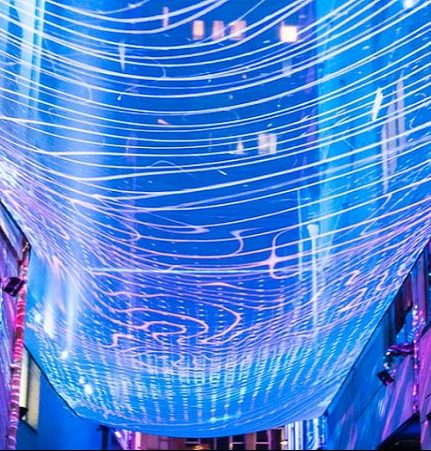
Kerfoot are proud to announce our involvement in one of this year’s most iconic Vivid Installations – . The Team worked in co-operation with Arup’s, Inspire Big Screen and Amplify (AMP) to deliver a product that both stunned and awed audience’s inspiring them to lose themselves in the Lighting and Audio experience that surrounded them.

Kerfoot installed all Lighting and Audio equipment in the 120 meter lane-way at an average height of 8 meters. Being a public space and working on occupied buildings made the installation more difficult however the team saw the project through and it was completed well before the due date and the commissioning of the new system went seamlessly.

Kerfoot installed their first Vivid lighting display 5 years ago and the technology evolution in that short space of time is staggering. The latest technology has enabled us to provide you with the display you were able to witness at this year’s Vivid.

Our integrations team enjoys keeping abreast with the new technologies and are looking forward to see what Vivid lighting display they can come up with next year.

If you require an industry leading and great quality Electrical Installation contact Kerfoot today.

Electrical Tagging at Work

electrical taggingEvery work space needs to be safe and functional. Proactivity is the key when it comes to maintaining your equipment and appliances. Electrical tagging and testing will help you keep track of which equipment has been verified as safe to use and which equipment is due for another inspection.


On June 12th, a woman was taken to hospital after suffering an electric shock at the Gawler Hotel in Adelaide. The incident took place whilst the woman was moving a refrigerator.

Dangerous appliances can be easily eliminated from commercial spaces with regular inspection. The same can be said for electrical equipment, including power tools and residual current devices. If you own a business, you are required to provide a safe environment for your staff members, customers, and other guests.

If you care about the longevity of your organisation, take a look at our tips for maintaining electrical equipment in your workplace.

Testing Appliances

The most effective way of eliminating shock in your working environment is hiring a professional to test & tag appliances. There are a number of everyday items that are often neglected when it comes to safety. Everyday appliances that are hidden in plain sight could be the most hazardous equipment in your workspace.

The following range of appliances should be regularly assessed for safe use:

  • Small kitchen appliances: including coffee machines, microwaves, kettles etc.
  • White goods: including refrigerators, washers, dryers etc.
  • Cleaning equipment: including vacuum cleaners, steam cleaners, pressure washers etc.
  • Office equipment: including computers, printers, power boards, cords etc.

electrical tagging

Testing Equipment

If your work involves the use of power tools, extension leads, RCDs, and other portable devices, testing, inspecting, and tagging electrical equipment should be a regular event on your work site. With so many electrical appliances in use, it can be easy to overlook some essential items for testing.

The following range of equipment should be regularly assessed for safe use:

  • Circuit protection: including safety switches, circuit breakers etc.
  • Power tools: including drills, saws, nail guns etc.
  • Accessories: including power boards, extension leads, generators etc.

As a general rule of thumb, you need to test any piece of equipment that plugs in. Your business will have specific testing obligations. These are dictated by state law and the relevant industry safety standards.

Electrical Tagging Requirements

The nature and frequency of the tests you conduct in your workplace will vary based on your equipment and environment. As we mentioned earlier, the safest possible option is to test every item that plugs in.

There are some national safety standards that you can refer to when determining the frequency and the types of tests that need to be conducted. For electrical equipment testing requirements in most working environments, we refer to the AS/NZS 3760 standard for the in-service inspection and testing of electrical equipment. For construction and demolition sites, you need to adhere to the AS/NZS 3012 standard for electrical installations.

If you want to know more about your specific testing obligations, take a look at the details here. If you have any questions, simply call us or get in touch via the online contact form. We’d be happy to help you secure your work space.

What are electrical tags?

They are tags that are attached to a piece of equipment after testing is complete. The tag will include the date when the item was last tested, details of who completed the testing, and a due date for the next test. They usually come in plastic form but you can find material tags attached to power cords and metal tags attached to fire extinguishers.

Who can take care of electrical tagging at my workplace?

We can! Here at Kerfoot, we offer a range of maintenance services to businesses. One of our electrical professionals can visit your place of business and inspect all of your electrical equipment. Our programmed preventative maintenance services (PPM) include RCD testing, emergency light inspection, and thermographic scanning.

Let us manage your electrical appliances and prevent unnecessary damage.

Faulty appliances can cost your business valuable hours, inhibiting productivity and potentially harming employees. There’s no reason to neglect your electrical equipment. Our friendly team can be in and out of your property in a jiffy. You only need to call us and book our services – we’ll take care of the rest.

At Kerfoot, we notify our clients when a scheduled maintenance booking is approaching. This way, you’ll remain on top of your electrical tagging requirements with minimal stress and effort on your part.

Contact us today to discuss our maintenance services.


Making an Electrical Emergency Response Plan

electrical emergency response plan

If you run a business, having an electrical emergency response plan is essential. This can also be referred to as a BCP (business continuity plan) or DRP (disaster recovery plan).

Whether the threat is to safety or productivity, you should have an emergency electrician on standby and a detailed plan in place. There are a number of situations that may require a response plan. We’ve covered the most common electrical emergencies and how your business should prepare for each situation.

Electrical Breakdown

If you run a business that depends on functional electrical machinery, an electrical breakdown could be your worst nightmare. Any disruption to productivity is less than ideal, so you need to have a fast response plan in place. This means choosing an on-call electrician.

In order to choose the right electrician for your business, do some research. Find a team that you are comfortable with and that you know you can depend on in an emergency.

At Kerfoot, we have a 24-hour electrician service available to all local businesses. Our capable and efficient team members provide electrical services at all hours of the day to all types of organisations. Browse through our services and get in touch if you have any questions.

After you have decided on your on-call electrician, put the phone number in an easily accessible place and make sure your employees know who to contact during an electrical breakdown.

Exposed Wiring

As soon as you identify exposed wiring you need to call an urgent electrician to take care of the problem. Dangerous working conditions are not only negligent – they can also lead to electrical shock and/or fire. Damaged wiring might be frayed in appearance or it might be harder to identify.

If you suspect an issue with the circuitry in your building, contact our team here at Kerfoot today. We can repair any critical issues and assess the rest of your property for any dangerous electrical faults.

Electrical Shock

Your electrical emergency response plan should have a dedicated focus on the safety of your employees. If an injury does occur, you need to have a plan in place. If someone in your place of business comes into contact with a live electrical wire, you follow these steps to reduce and contain electrical risk.

  • Call for emergency services by dialling 000.
  • Do not touch the person who has been contacted by electricity.
  • Turn the power off at the main switchboard or at the source of the current for the circuit in question.
  • If you are unable to turn the power off, you need to end the person’s contact with the current to prevent further injury or fatality. Do this by using an insulated object to push the person clear of the electricity source. This might be an item made out of wood or rubber.
  • In preparation, make sure a member of staff is trained in CPR. This person should provide first aid to the injured party.
  • Call an electrician to provide emergency electrical assistance and repair any damaged circuitry.
  • Report the incident to the energy safety department in your local government. For NSW based businesses, you can go to the following websites:

http://www.safework.nsw.gov.au/

Electrical Fire

Electrical faults can sometimes result in fire. In general, all businesses should have a fire evacuation plan in place. This means having regular fire drills and making sure all staff members are aware of the evacuation paths and meeting points.

You should also make sure you have equipment available to your team members that is designed to be used on electrical fires. Have a CO2 (black banded) fire extinguisher installed and maintained in your place of work.

When dealing with an electrical fire on your property, make sure your team members follow this electrical emergency response plan for fires:

  • Call the emergency services on 000.
  • Turn off the power or disconnect the appliance in question.
  • Use a CO2 fire extinguisher that is designed to combat flames with an electrical source. It is important that you do not use an extinguisher that contains a conducting agent.
  • Report the incident to your relevant local energy authority.
  • Ask a licensed electrician to inspect and repair any faulty equipment/installations.


Having an electrical emergency response plan is a great way to be proactive about safety in your building. If you have any questions about our range of services, please get in touch. We are proud to help businesses with productivity and safety every day.

Vivid 2017

Kerfoot are proud to announce our involvement in one of this year’s most iconic Vivid Installations – . The Team worked in co-operation with Arup’s, Inspire Big Screen and Amplify (AMP) to deliver a product that both stunned and awed audience’s inspiring them to lose themselves in the Lighting and Audio experience that surrounded them.

Kerfoot installed all Lighting and Audio equipment in the 120 meter lane-way at an average height of 8 meters. Being a public space and working on occupied buildings made the installation more difficult however the team saw the project through and it was completed well before the due date and the commissioning of the new system went seamlessly.

Kerfoot installed their first Vivid lighting display 5 years ago and the technology evolution in that short space of time is staggering. The latest technology has enabled us to provide you with the display you were able to witness at this year’s Vivid.

Our integrations team enjoys keeping abreast with the new technologies and are looking forward to see what Vivid lighting display they can come up with next year.

If you require an industry leading and great quality Electrical Installation contact Kerfoot today.

RCD Testing Requirements NSW

rcd testing requirements nsw

If you’re a New South Wales based business, you’ll know that RCD Testing is an essential. Without maintaining your residual current device/s, you can put both your employees and your livelihood at risk. Luckily, you can avoid any nasty mishaps by knowing the RCD testing requirements NSW businesses need to adhere to.

As of the 22nd of May, 63 Australian workers have been killed at work in 2017. In 2016, a total of 8 workers were killed by electrocution.

SafeWork NSW published a Code of Practice in September 2016 for Managing Electrical Risks in the Workplace. This code states that “a person conducting a business or undertaking has the primary duty under the WHS Act to ensure, so far as is reasonably practicable, that workers and other persons at the workplace are not exposed to electrical risks arising from the business or undertaking”.

This includes regular safety switch maintenance and testing conducted according to the current Australian standard.

What is a residual current device?

A residual current device (RCD) or safety switch, is a protective piece of equipment that monitors electrical circuits and switches off the electricity when a fault is detected. It provides protection from electrocution (where electricity passes through the body and into the earth) and can also be effective for the prevention of electrical fire.

You can use fixed RCDs, socket outlet units, and portable devices in your workplace. The most functional model will vary based on the nature of your work.

Safety switches are life-saving devices and an absolute necessity in every working environment. In order to be effective, they need to be maintained in accordance with the relevant safety standards. The frequency and nature of testing will vary according to your industry, environment, and usage.

RCD Testing Requirements NSW

According to SafeWork NSW, “RCD requirements” only apply to working environments where plug-in electrical equipment is in use or in hostile operating environments. A hostile working environment means a workplace where electrical equipment may be damaged as a result of exposure to the environment. This exposure can be to moisture, heat, vibration, mechanical damage, corrosive chemicals, and dust.

According to safe work Australia, electrical equipment used in hostile operating environments needs to be tested and inspected at least once every 12 months.

You can refer to this Code of Practice from SafeWork NSW that includes a guide to electrical risk management in your workplace. This guide includes:

  • How to identify a hazard
  • Assessing risks associated with hazards
  • Implementing and maintaining risk control measures (for example, testing RCDs, electrical testing and tagging, etc.)
  • Reviewing risk control measures

There are two standards that we work to at Kerfoot to ensure absolute compliance with the state standards RCD test and inspection requirements. They are:

  • AS/NZS 3760: 2010 – In-service safety inspection and testing of electrical equipment
  • AS/NZS 3012: 2010 – Electrical installations – Construction and demolition sites

If your workplace is not on a construction or demolition site. Please refer to the following guide of testing intervals according to the AS/NZS 3760: 2010. The RCD testing requirements NSW businesses should meet are as follows:

  • In factories, workshops, places of manufacture, assembly, maintenance, or fabrication, residual current devices must be tested every 12 months by a trained technician (for both an operating time and push button test). A push button test by the user should be completed daily for portable devices and 6 months for fixed.
  • In an environment where the equipment or supply flexible cord is subject to flexing in normal use or is open to abuse or is in a hostile environment, both portable and fixed RCDs need to be tested every 12 months (operating time & push button) by a technician. The user should complete a push button test every 3 months for a portable device and every 6 for fixed.
  • In an environment where the equipment or supply cord is not subject to flexing in normal use and is not open to abuse and is not in a hostile environment, the technician needs to test both types of safety switches every 2 years, completing all the necessary testing. The use needs to do a push button test every 3 months for portable devices and every 6 months for fixed.
  • In residential type areas of hotels, residential institutions, motels, boarding houses, halls, hostels, accommodation houses, etc. the safety switches need to be tested every 2 years by a technician (operating time & push button) as well as every 6 months by the user (portable and fixed).
  • If the electrical equipment is used for cleaning, portable RCD inspection needs to occur every 6 months (where both the operating and push button test are completed) and daily from the user (just the push button test).
  • Hire equipment needs to be inspected prior to hire by the hirer. RCDs need to be tested and tagged every 3 months (if portable) and every 12 months (if fixed).
  • Repaired, Serviced, and second-hand equipment needs to be tested after the repair or service or before reintroduction to service.


For more information about RCD testing requirements NSW businesses can follow this link with specific information for construction and demolition sites.

Kerfoot Internationally Recognised for Management Systems

At Kerfoot, we continue to strive for and seek excellence. Our organisation takes pride in our commitment to quality & customer satisfaction.   After a rigorous assessment process, Kerfoot is now internationally recognised & certified for our management systems. Through strict adherence to the certification standards, we have attained the three key certifications.

Our certification comes from DNV GL and is internationally recognised. Each certification assessment standard was applied to our business with careful consideration of our plans and processes in the following systems:

  • Quality management system: this system has a focus on customer satisfaction and includes the policies, procedures, and processes required to run an organisation.
  • Environmental management system: this system refers to the management of a business’s environmental programs/efforts.
  • Occupational health & safety management system: this system involves the management of OHS policy and procedures for ongoing safety in an organisation.

We are pleased that our systems have garnered international recognition. At Kerfoot, we have processes in place for the benefit of our clients. This means a strict focus on client satisfaction – a key criterion of the ISO 9001:2015 certification. Decades of industry experience have influenced our processes. Continuous evaluation of the Kerfoot method has led to a superior quality management system.

The Kerfoot team have always been committed to environmental projects. Our environmental management system was assessed as a part of our ISO 14001:2015 certification. This means that our efforts as an organisation to enhance environmental performance have been recognised. We have plans and documentation in place to support an active approach to environmental procedure. We do this by seeking out relevant initiatives (detailed in the accreditation page) and providing clients with sustainable options.

Dedication to safety is evident in every facet of our business. Kerfoot projects are completed with accordance to relevant safety standards for the benefit of consumers and employees. The AS/NZS 4801 accreditation recognises our occupation health & safety management system. Our unceasing attention to risk management and the provision of safety resources has been verified by this industry standard.

As an organisation, we are proactive. We work to achieve the highest industry standards so that our clients can be assured of quality and satisfaction. Our management team strive to attain the relevant certification as a signifier of our excellent standards. You can be sure that with Kerfoot, you will have access to management systems that are internationally verified.

The Kerfoot team would like to thank you (our clients, suppliers, and staff members) for your contribution to our business. With your continued involvement, we will continue to meet these international standards and endeavour to exceed our past efforts. Thank you for choosing to work with us.

Contact us today for more information about how our management systems can benefit you. We work with a wide range of clients on small and large scale projects.

For more information about our management system certifications, take a look at our Management System Certification page.

Save Energy with your Sydney Local Electrician

sydney local electrician Is your business located in Sydney? Are you an environmentally conscious organisation, or someone who is interested in reducing consumption costs? Kerfoot are your Sydney local electrician team with a difference. We have a track record in energy saving projects and can help you minimise consumption in your business. Take a look at our energy saving tips today or contact our team for more information about how we can help you enhance your next electrical project.

With our energy efficient solutions, you will have access to a range of benefits including:

  • Minimised cost
  • Reduced environmental impact
  • Improved working environment
  • Independence (with renewable energy)

 Renewable Energy

There a number of renewable energy sources and initiatives available for businesses in Australia. These sources include:

  • Hydro Energy
  • Solar Energy
  • Ocean Energy
  • Wind Energy
  • Bioenergy

Your business may choose to install solar, water, or wind-powered systems, or buy GreenPower. GreenPower is a government initiative wherein energy customers can elect to receive some or all of their power through renewable sources. All you have to do is contact your electricity supplier and choose the percentage of GreenPower you would like to receive.

The following statistics are a summary of our progress in reaching the national Renewable Energy Target (last updated 2015). As a nation, we have a long way to go. You can join the movement towards a more sustainable Australia by switching to clean energy today. Contact our Sydney local electrician team for support and guidance in your sustainable journey.

sydney local electrician

Source: Clean Energy Council Fact Sheet 2015

At Kerfoot, we conduct renewable electrical services Sydney businesses should all invest in. Contact us today to find out more about how we can make your company more sustainable.

Efficient Lighting Solutions

Upgrade to LED: LED bulbs can last 25% longer than regular incandescent lighting. With fewer replacements, you can reduce your overall lighting cost. They also use around 75% less energy than other lighting options.

Sensor lights for restrooms: For rooms that are frequently in use, you can install motion sensor technology that ensures the lights are off when the room is empty.

Energy management system/Lighting Controls: With an efficient lighting control system, you can manage the lighting in your entire building. With accurate control, you can design a specific program that minimises consumption in your building.

Regular Cleaning and inspection: Dusting lights regularly will ensure each bulb isn’t subject to unnecessary dimming. With thorough inspection of your lighting system, you can eliminate any faulty parts and achieve optimum results.

What can you do?

Whilst we recommend that you seek advice from your Kerfoot Sydney local electrician, there are some minor improvements you can make on your own. The following tips will help you minimise the environmental impact of your business:

  • Replace dated equipment with new “energy star rated” equipment.
  • Turn off the lights when they aren’t in use.
  • Window caulking & insulation.
  • Turn off appliances and equipment at the power point when they aren’t in use.
  • Reuse paper and make sure your staff recycle.

  • Replace old heating and air conditioning systems.

For more information about how you can reduce energy consumption in your business, take a look at this guide from the Australian Government.

Our Electrical Services

With our Sydney electrical services, you can minimise the chance of electrical breakdown and maintain an efficient system. With a sustained effort to maintain the functionality of your equipment and systems, you can ensure that each device is working at optimum capacity. Eliminate faulty or damaged equipment with regular inspection and testing services from Kerfoot. The following range of services could help your business achieve maximum productivity and minimise costly disruption:

Programmed preventative maintenance: Our electricians can create a schedule that meets your unique business requirements. Our programmed maintenance plans are available to ensure any issues are dealt with ahead of time. This proactive approach will reduce the chance of disruption in your organisation.

Safety switch testing: Ask our Sydney local electrician to inspect and test your RCD devices. If you have a faulty switch that causes frequent tripping, it can lead to unnecessary energy costs involved in rebooting your system. A working switch is essential for safety.

Testing and tagging: Functional equipment will ensure maximum productivity in your business. Through regular inspection and testing, you can verify the practicality of each device.

Thermographic scanning: Unexplained equipment failure and electrical system disruption can be explained with thermal imaging. Ask one of our capable staff to identify faulty devices today.